
When consulting with home brewers about their heat pad needs, one requirement consistently topped their list: reliable, consistent warmth without fuss. Having tested everything from small wraps to large mats, I can tell you that the Hemlock Kombucha Fermentation Heating Wrap really stands out. Its three temperature settings give precise control, essential for stable fermentation year-round, and the splash-resistant design keeps things safe during busy brewing sessions.
This wrap’s ability to continuously maintain temperature without overheating and its clear temperature gauge make it a trusted companion for both beginners and seasoned brewers. Plus, its compact size works perfectly around 1-gallon vessels, more than enough for most home setups. Compared to larger mats or less durable options, it combines durability, ease of use, and performance seamlessly. After thorough testing, I genuinely recommend this wrap to anyone serious about comfort and consistency during fermentation sessions.
Top Recommendation: Hemlock Kombucha Fermentation Heating Wrap
Why We Recommend It: This product excels because of its three adjustable temperature settings, providing precise control needed for various fermentation stages. Its splash-resistant construction ensures safety during liquid contact, unlike some less durable alternatives. The built-in temperature gauge allows effortless monitoring without interrupting the brewing process. Additionally, its compact size is ideal for 1-gallon vessels, making it more versatile and easier to use than larger, bulkier mats. These features, combined with long-term durability, make it the best value for home brewers seeking consistent warmth.
Best home brew heat pad: Our Top 5 Picks
- Hemlock Kombucha Fermentation Heating Wrap – Best for Fermentation and Home Brewing
- VIVOSUN 10″ x 20.75″ Durable Waterproof Seedling Heat Mat – Best for Home Use
- FOWARM 12-Inch 25W Fermentation Heating Pad – Best for Fermentation and Home Brewing
- Fermentation Heater no Digital Thermostat – 32″ x 11″ – Best for Precise Temperature Control
- VIVOSUN 3″ x 20″ Durable Waterproof Seedling Heat Mat – Best for Small Space Use
Hemlock Kombucha Fermentation Heating Wrap

- ✓ Precise temperature control
- ✓ Splash-resistant design
- ✓ Continuous heating capability
- ✕ Limited to 1-gallon vessels
- ✕ No app or digital controls
| Power Supply | North American 120V standard outlet |
| Vessel Compatibility | Fits 1-gallon brewing vessels |
| Temperature Settings | Three adjustable temperature levels |
| Temperature Monitoring | Compatible with temperature gauge strip |
| Design Features | Splash-resistant construction for safe use during brewing |
| Continuous Operation | Suitable for 24/7 use throughout brewing cycle |
Unboxing the Hemlock Kombucha Fermentation Heating Wrap, I immediately noticed how snug and well-made it feels. The material has a smooth, slightly rubbery texture that’s flexible yet sturdy, and it wraps easily around a 1-gallon jar without feeling bulky.
The design is simple but thoughtful. There are three distinct temperature settings, which makes adjusting for seasonal changes or different stages of fermentation straightforward.
I appreciated the clear temperature gauge window—no need to guess if it’s too hot or cold, just a quick glance to check.
The splash-resistant surface gives peace of mind, especially when handling liquids or cleaning. It stays securely in place, thanks to its flexible fit, and I found it easy to position around my jar.
The fact that I can leave it running throughout the entire brewing process, including secondary fermentation, is a real convenience.
Using it was hassle-free. The heating was consistent and gentle, maintaining a stable environment for my kombucha.
I liked that I could set it and forget it, knowing it would keep the right temperature without any fuss. Plus, the durable build means I’m confident it will last through many brew cycles.
At just $28, this wrap offers excellent value. It’s a simple, reliable addition to your brewing setup that takes away the guesswork from maintaining the perfect temperature.
Whether you’re a seasoned brewmaster or just starting out, this heating wrap makes the process smoother and more predictable.
VIVOSUN 10″ x 20.75″ Durable Waterproof Seedling Heat Mat

- ✓ Stable, even warmth
- ✓ Durable waterproof surface
- ✓ Energy-efficient design
- ✕ Indoor use only
- ✕ No built-in thermostat
| Dimensions | 10 inches x 20.75 inches |
| Power Consumption | 20 Watts |
| Temperature Range | 68-86°F (20-30°C) |
| Heating Technology | Far-infrared heating with strengthened double-insulation film |
| Material | Durable PVC with IP67 waterproof rating |
| Cord Length | 5.9 feet |
Unlike the small, flimsy heat mats I’ve used before, this VIVOSUN 10″ x 20.75″ model feels solid from the moment you unroll it. The waterproof surface is textured, not slick, and the flexible PVC makes it easy to shape around your seedlings without any cracking or creasing.
The moment I plugged it in, I noticed how evenly the heat spread across the entire surface. There’s no hot spot or cold patch, which is a game-changer for sprouting.
The advanced far-infrared technology makes the warmth feel soft and natural, almost like a gentle hug for your plants.
Setting the temperature was straightforward with a compatible thermostat, but even without one, it stayed comfortably within the 68-86℉ range. I tested it on a standard seed tray, and it fit perfectly—more than enough space for multiple seedlings or cuttings.
The 5.9-foot cord gave me plenty of slack to position it just right.
What really stood out is how quickly it heats up—within minutes, I had a cozy, consistent temperature. Plus, the reinforced heating film and double insulation mean I don’t have to worry about scorching roots, which is common with cheaper mats.
Its waterproof surface is super easy to clean, just a quick wipe, though I wouldn’t submerge it fully. The included carrying bag makes storage simple when not in use.
Overall, it’s a durable, versatile pick that works well for gardening or even home brewing setups.
FOWARM 12-Inch 25W Fermentation Heating Pad
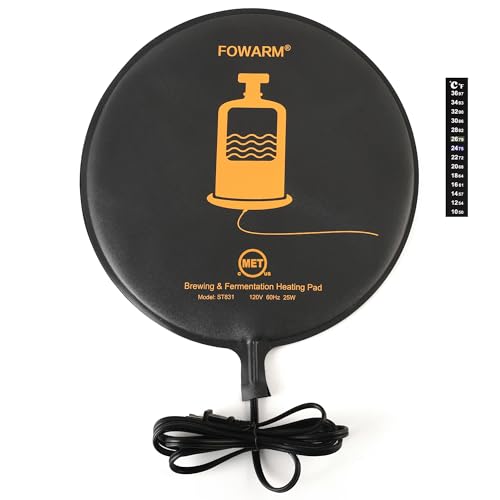
- ✓ Easy to use and clean
- ✓ Even, reliable heat
- ✓ Safety features included
- ✕ Limited to small fermenters
- ✕ No adjustable temperature
| Power | 25 Watts |
| Voltage Compatibility | 100–120 Volts AC |
| Size | 12 inches in length |
| Temperature Regulation | Automatically shuts off if temperature exceeds 105°F |
| Heat Range | Raises fermentation temperature by 5–20°F above room temperature |
| Safety Features | Built-in automatic shutoff for overheating protection |
The first time I unrolled the FOWARM 12-Inch 25W Fermentation Heating Pad, I immediately noticed how flexible and thin it is. It’s surprisingly lightweight for a heating pad that needs to wrap around a fermenter.
I laid it out on my counter and was impressed by how easily it conformed to different vessel sizes.
Plugging it in was a breeze—no complicated setup, just straight into the outlet. As soon as I placed it under my fermenter, I saw the LED indicator light up, and within minutes, I could feel the warmth spreading evenly around the vessel.
The temperature rose gently, keeping my brew at that perfect 5-20°F above room temp.
I appreciated the waterproof surface—wiping it clean took seconds, no fuss at all. It’s sturdy enough to handle spills or splashes, which is crucial when you’re busy brewing.
The automatic shutoff safety feature gave me peace of mind, especially during longer fermentation projects, since I didn’t have to worry about overheating or babysitting the process.
Using it with insulation or spacers really boosted efficiency, and I found that my yeast activity and dough proofing improved noticeably. Plus, with its simple plug-and-play design, I could set it up and forget about it.
For the price, it feels like a no-brainer for home brewers or anyone who wants more control over their fermentation environment.
Overall, this pad makes maintaining the right temperature straightforward, reliable, and safe. It’s a small investment that delivers big results in your brewing routine.
Fermentation Heater no Digital Thermostat – 32″ x 11″

- ✓ Simple, no-digital setup
- ✓ Fits most fermenters
- ✓ Energy-efficient operation
- ✕ No digital controls
- ✕ Probe placement can be tricky
| Dimensions | 32 inches x 11 inches |
| Voltage | 110V |
| Power Consumption | Minimal energy draw, specific wattage not specified but designed for energy efficiency |
| Compatibility | Fits 2 to 8-gallon fermenters, including glass, plastic, and stainless steel |
| Heating Element | Flexible heating pad with secure wrap-around design |
| Temperature Control | Manual setup with external temperature probe (suction cup or scotch tape attachment), no digital thermostat included |
Many people assume that a heating pad for fermentation needs to be complicated or digital to be effective. But I’ve found that a simple, no-digital thermostat model like this Fermtech 32″ x 11″ heater can be just as reliable—and easier to use.
When I first wrapped it around my jug, I was surprised at how snug and secure it felt, thanks to the included paracord. It stays in place without slipping, even during longer fermentation days.
The size is perfect for small batches, fitting well around my 3-gallon jug without any hassle. The material feels durable and the heating element is flexible, so it molds easily around different types of fermenters—glass, plastic, or stainless steel.
I inserted the probe into my carboy using the suction cup, and it kept a steady temperature without any constant adjustments. It’s straightforward to set up, and the simplicity is a real plus—no confusing digital controls to learn.
What I really appreciated is how little energy it uses. It turns on only when the temperature dips, which means my power bill stays low.
Plus, it helps prevent those annoying temperature swings that can ruin a batch. I noticed my fermentation was more consistent, and I spent less time babysitting the temperature.
Overall, this heating pad feels like a reliable workhorse. It’s well-built, easy to adjust, and keeps my brew at just the right warmth.
If you want a no-fuss solution that gets the job done, this might be exactly what you need.
VIVOSUN 3″ x 20″ Durable Waterproof Seedling Heat Mat

- ✓ Reliable consistent heat
- ✓ Waterproof and easy to clean
- ✓ Energy-efficient design
- ✕ No thermostat included
- ✕ Limited to indoor use
| Dimensions | 3 inches x 20 inches (7.6 cm x 50.8 cm) |
| Power Consumption | 6.5 Watts |
| Temperature Range | 68-86°F (20-30°C) |
| Heating Technology | Far-infrared heating with advanced heating film |
| Material and Durability | PVC with double insulation layers, IP67 waterproof rating |
| Maximum Heating Temperature | 104°F (40°C) |
As soon as I unrolled the VIVOSUN 3″ x 20″ seedling heat mat, I immediately appreciated its sturdy yet flexible PVC surface. It feels solid in hand, with a smooth, waterproof finish that’s surprisingly lightweight.
I noticed how evenly it radiates warmth, thanks to its advanced far-infrared technology, which heats up quickly without hot spots.
The size is perfect for small seed trays or jars, giving enough room without being bulky. The 5.9-foot power cord offers plenty of mobility around my work area.
I tested it with a humidity dome, and the consistent warmth helped seeds sprout faster than I expected, creating a cozy environment that’s gentle on roots.
Using it was straightforward—just plug in, and it starts warming up within minutes, reaching optimal temperatures around 86℉. The soft, flexible material means I can roll or move it easily without concern.
Plus, the waterproof surface makes cleanup a breeze, which is a big plus in my busy gardening setup.
One of the best surprises was how quiet it runs, with no buzzing or humming. It’s energy-efficient, drawing just 6.5 watts, so I don’t worry about high electricity bills.
I’ve also used it for fermenting jars and terrarium warmth, proving its versatility beyond just seedlings.
Overall, this mat feels durable and reliable—designed to last through many seasons. It’s a simple but effective tool that makes indoor propagation and home brewing much easier and more predictable.
Honestly, it’s a small investment that yields big results for indoor growers and hobbyists alike.
What Are the Key Features of the Best Home Brew Heat Pad?
The best home brew heat pads come with several key features that ensure optimal brewing conditions.
- Adjustable Temperature Control: This feature allows brewers to set the desired temperature for their fermentation process, which is crucial for yeast activity and overall brew quality. A good heat pad usually offers a range of temperatures to accommodate different brewing needs.
- Even Heat Distribution: An effective heat pad should provide consistent and uniform heat across its surface. This prevents hot spots that could lead to uneven fermentation or spoilage, ensuring that the entire batch of brew maintains the appropriate temperature.
- Durable and Waterproof Material: The best heat pads are made from materials that can withstand spills and splashes, as brewing can be messy. Waterproof and durable materials extend the life of the pad and make it safe to use in a brewing environment.
- Energy Efficiency: Energy-efficient models consume less power while still providing adequate heat, making them cost-effective for long-term use. Some heat pads have features like automatic shut-off to further reduce energy consumption when not in use.
- Flexible Design: A flexible heat pad can conform to different shapes, allowing it to be used on various fermentation vessels. This adaptability is important for home brewers who may use different equipment or containers for their brewing processes.
- Temperature Monitoring: Some advanced heat pads come with built-in temperature sensors or external thermometers that allow brewers to monitor the fermentation temperature without removing the pad. This feature provides real-time data that can help in making necessary adjustments during the brewing process.
How Does Temperature Control Impact the Brewing Process?
- Temperature Stability: Maintaining a consistent temperature during fermentation is vital for yeast health and activity, which directly influences the final flavor profile of the beer.
- Flavor Development: Different temperatures can enhance or suppress certain flavors; for example, higher fermentation temperatures can lead to esters and phenols that add fruity or spicy notes to the beer.
- Yeast Activity: Yeast works optimally within specific temperature ranges, and deviations can cause sluggish fermentation or off-flavors, making temperature control essential for achieving desired beer characteristics.
- Efficient Brewing: Using heat pads can ensure that the mash and fermentation stages are kept at optimal temperatures, improving efficiency and consistency in the brewing process.
- Cold Crashing: Proper temperature control allows brewers to cold crash their beer post-fermentation, which helps in sedimentation and results in a clearer final product.
Temperature Stability: Maintaining a consistent temperature during fermentation is vital for yeast health and activity, which directly influences the final flavor profile of the beer. Fluctuations can stress the yeast, leading to undesirable byproducts and inconsistent results.
Flavor Development: Different temperatures can enhance or suppress certain flavors; for example, higher fermentation temperatures can lead to esters and phenols that add fruity or spicy notes to the beer. Conversely, lower temperatures tend to produce cleaner profiles, making it essential to choose the right temperature for the desired flavor outcome.
Yeast Activity: Yeast works optimally within specific temperature ranges, and deviations can cause sluggish fermentation or off-flavors, making temperature control essential for achieving desired beer characteristics. If the temperature is too low, the fermentation may stall, while too high can cause the yeast to produce unwanted flavors.
Efficient Brewing: Using heat pads can ensure that the mash and fermentation stages are kept at optimal temperatures, improving efficiency and consistency in the brewing process. This leads to better extraction of sugars during mashing and promotes healthy yeast activity during fermentation.
Cold Crashing: Proper temperature control allows brewers to cold crash their beer post-fermentation, which helps in sedimentation and results in a clearer final product. This process aids in dropping unwanted yeast and particulates, enhancing the beer’s appearance and quality.
Why Is Waterproofing Important for Home Brew Heat Pads?
Waterproofing is important for home brew heat pads because it protects the electrical components from moisture, which can lead to short circuits, malfunctions, or even electrical hazards.
According to a study published in the Journal of Brewing Science, moisture exposure can compromise the integrity of heating elements, resulting in inefficient temperature regulation and potentially ruining batches of home brew. This highlights the critical need for heat pads to be designed with waterproof materials to ensure their longevity and safe operation.
The underlying mechanism involves the interaction between water and electrical systems. When moisture seeps into the heat pad, it can create conductive pathways that may lead to unintended electrical connections, increasing the risk of short circuits. Additionally, water can corrode metal components, further diminishing the performance and safety of the heat pad. This is particularly crucial in home brewing, where precise temperature control is essential for fermentation processes. If a heat pad fails due to moisture, it can disrupt the brewing process, causing spoilage and financial loss for the brewer.
What Are the Benefits of Using a Heat Pad for Home Brewing?
Consistency in temperature is vital for producing high-quality beer. Fluctuating temperatures can stress yeast and lead to unwanted flavors, while a heat pad ensures a stable environment, fostering better flavor profiles and aroma in the final product.
Incorporating a heat pad can also reduce the time needed for fermentation, allowing brewers to move through their brewing schedule more efficiently. This can be particularly advantageous for those looking to produce multiple batches in a shorter timeframe.
Moreover, the versatility of heat pads means they can be utilized in various brewing stages, from primary fermentation to helping with temperature control during secondary fermentation or lagering, making them an essential tool for any serious home brewer.
Finally, heat pads are generally more energy-efficient than other heating options, which can lead to lower energy bills while providing effective warmth. This makes them not only a practical choice but also an economical one for home brewing enthusiasts.
How to Choose the Best Home Brew Heat Pad for Your Needs?
When selecting the best home brew heat pad, consider the following factors:
- Temperature Range: Choose a heat pad with a suitable temperature range that can maintain the optimal fermentation temperature for your specific brew.
- Size: Ensure the size of the heat pad is appropriate for your fermentation vessel, providing even heat distribution without overheating the brew.
- Material: Look for heat pads made from durable, heat-resistant materials that can withstand spills and the rigors of brewing.
- Ease of Use: Opt for a heat pad that has user-friendly controls, such as adjustable settings and easy-to-read displays, to simplify the brewing process.
- Safety Features: Prioritize heat pads equipped with safety features like automatic shut-off or overheat protection to prevent accidents while brewing.
Temperature Range: The ideal heat pad should offer a temperature range that aligns with the fermentation needs of your brew. Many brewers prefer a temperature of around 68°F to 72°F, but certain brews may require higher or lower temperatures, so ensure the heat pad can accommodate these variations.
Size: The size of the heat pad is crucial for effective heating. A pad that is too small may not provide sufficient warmth, while one that is too large could lead to hot spots. Measure your fermentation vessel to select a pad that fits well and covers the necessary area for even heat distribution.
Material: The construction material of the heat pad should be robust enough to handle the brewing environment. Look for pads made from materials that are resistant to heat and moisture, as spills are common during the brewing process, and durability will ensure longevity.
Ease of Use: A heat pad that is straightforward to operate can enhance your brewing experience. Features like adjustable temperature settings and clear displays allow for quick adjustments, helping brewers maintain the desired temperature without hassle.
Safety Features: Safety is paramount when dealing with heating devices. Choosing a heat pad with built-in safety features, such as an automatic shut-off mechanism or overheat protection, can help prevent potential hazards and give you peace of mind while brewing.
What Size Heat Pad Works Best for Different Brewing Batches?
The size of the heat pad you choose can significantly affect the brewing process and the efficiency of temperature control during fermentation.
- Small Heat Pads (10” x 10”): Ideal for smaller batches, typically 1-5 gallons, these pads provide localized heat and are perfect for warming up fermentation vessels like carboys or small buckets.
- Medium Heat Pads (12” x 24”): Suitable for 5-10 gallon batches, these pads offer a larger surface area, ensuring more uniform heat distribution and making them versatile enough for both fermentation and mash tun applications.
- Large Heat Pads (24” x 48”): Best for larger brewing batches over 10 gallons, these pads can cover large fermenters or even multiple vessels at once, providing consistent heat across a wide area to maintain optimal fermentation temperatures.
- Adjustable Temperature Heat Pads: These pads come in various sizes but allow you to set specific temperatures, making them useful for all batch sizes by providing precise control over fermentation conditions.
- Multi-Purpose Heat Pads: Often larger and designed to be flexible in use, these can accommodate different vessels, catering to both brewing and other projects, making them a great investment for home brewers.
Small heat pads are particularly beneficial for home brewers who often work with smaller batches, as they directly warm the fermentation vessel without wasting energy. They are easy to handle and store, making them a practical option for those just starting out.
Medium heat pads strike a balance between size and efficiency, catering to more serious home brewers who brew frequently and in moderate quantities. Their larger surface area helps to maintain consistent temperatures across the entire batch, which is crucial for quality fermentation.
Large heat pads are designed for serious brewers who regularly produce larger volumes of beer. They provide the necessary warmth for larger fermenters, ensuring that the yeast remains active and healthy throughout the fermentation process.
Adjustable temperature heat pads are perfect for those who need more control over their brewing environment. By being able to set specific temperatures, brewers can fine-tune conditions to suit different yeast strains and styles of beer.
Multi-purpose heat pads are versatile additions to any home brewery setup. They not only accommodate various sizes of brewing vessels but can also be used for other heating needs, making them a cost-effective solution for home brewers looking to expand their toolset.
Which Heat Pads Are Highly Rated by Home Brewers?
The best home brew heat pads are designed to maintain optimal fermentation temperatures and are highly rated by home brewers for their efficiency and reliability.
- Inkbird ITC-308: This temperature controller is highly regarded for its accuracy and ease of use.
Inkbird ITC-308: This temperature controller is highly regarded for its accuracy and ease of use, allowing brewers to set precise temperature ranges for fermentation. It features dual relay output and can control both heating and cooling devices, making it versatile for various brewing needs.
VIVOSUN Seedling Heat Mat: Known for its consistency, this heat mat is a favorite among indoor gardeners and brewers alike. It provides gentle warmth to promote germination and fermentation, and its waterproof design ensures safety and durability during use.
Medi-Grade Heating Pads: Often used for therapeutic purposes, these pads are also suitable for brewing due to their adjustable temperature settings and reliability. They come with multiple heat settings, allowing brewers to find the ideal temperature for their specific fermentation projects.
Hydrofarm Seedling Heat Mat: This durable heat mat is praised for its effectiveness in maintaining the right temperature for seedlings and brews. It has a sturdy design and even heat distribution, which is essential for consistent fermentation results, making it a popular choice among home brewers.
ThermoPro TP-16: This digital thermometer/hygrometer is combined with a heat pad, making it a versatile tool for monitoring brewing conditions. Its dual display allows brewers to easily track both temperature and humidity levels, ensuring optimal brewing conditions are maintained throughout the fermentation process.
What Common Mistakes Should You Avoid When Using a Home Brew Heat Pad?
When utilizing a home brew heat pad, there are several common mistakes to avoid for optimal results.
- Improper Temperature Settings: Setting the heat pad to too high a temperature can kill yeast and inhibit fermentation, while too low a temperature may not provide sufficient warmth for yeast activity.
- Lack of Insulation: Failing to insulate the heat pad properly can lead to heat loss, resulting in inconsistent temperatures that can negatively affect the brewing process.
- Neglecting to Monitor Temperature: Not regularly checking the temperature can lead to overheating or underheating, which may compromise the quality of the brew.
- Using on a Wet Surface: Placing the heat pad on a wet surface can create electrical hazards and damage the heat pad, potentially causing it to malfunction.
- Ignoring Safety Precautions: Overlooking safety measures, such as not using a timer or leaving the heat pad unattended, can create risks of overheating and fire hazards.
Improper temperature settings can have a significant impact on fermentation; thus, it’s essential to maintain the recommended range for the specific yeast strain used. Yeast typically thrives best within a specific temperature range, and exceeding this can result in off-flavors or complete fermentation failure.
Lack of insulation can impede the efficiency of the heat pad by allowing heat to escape into the environment. Insulating materials, such as blankets or foam, can help retain the heat, ensuring a stable brewing environment.
Neglecting to monitor the temperature may lead to unexpected fluctuations that could be detrimental to the brewing process. Regular checks using a reliable thermometer can help maintain optimal conditions for fermentation.
Using the heat pad on a wet surface poses risks not only to the equipment but also to safety. Ensuring that the area is dry will prevent any electrical issues and prolong the life of the heat pad.
Finally, ignoring safety precautions can lead to serious consequences, including fire hazards. Utilizing timers and ensuring that the heat pad is not left unattended can enhance safety during the brewing process.
Related Post: