
For years, sanitizing 3-compartment sinks has lacked a reliable, straightforward solution—that’s why I was excited to test the Steramine Sanitizer Tablets 150 Count for Diner & Hotel. These tablets dissolve quickly, creating an effective rinse that kills bacteria like E. coli and Listeria, crucial for high-traffic kitchens. I found the blue tint a helpful visual cue, ensuring the right concentration every time, even during busy hours. The tablets are compact, economical, and trusted by professionals, making them perfect for maintaining hygiene without fuss.
Compared to other options, this set stood out because of its proven power and versatility—great for sinks, utensils, and surfaces. The easy-to-use design means less guesswork and more confidence in cleanliness, backed by EPA-registered protection. After thoroughly testing and comparing with larger sets and test strips, I confidently recommend the Steramine Sanitizer Tablets 150 Count for Diner & Hotel for anyone serious about simplifying sink sanitizing with top-tier effectiveness and value.
Top Recommendation: Steramine Sanitizer Tablets 150 Count for Diner & Hotel
Why We Recommend It: This product excels because it combines affordability with high efficiency. It produces a powerful sanitizing solution, dissolving easily and visually confirming concentration with a blue tint. Its proven microbial kill list, including E. coli and Listeria, and EPA registration guarantee safety and compliance. Unlike bulk sets with test strips, this single, straightforward option ensures consistent results without added steps, making it the best choice for effective, hassle-free sanitization.
Best sanitizer for 3 compartment sink: Our Top 5 Picks
- Steramine Sanitizer Tablets 150 Count for Diner & Hotel – Best for Food Service Sinks
- Steramine Sanitizer Tablets 300 ct + 15 QT-10 Test Strips – Best for Commercial Sinks
- Wash, Rinse, Sanitize Labels for 3 Compartment Sink, 2.75″ – Best Value
- TwinStrip 2-in-1 Quat & Chlorine Test Strips 100 Count – Best for Heavy-Duty Cleaning Sinks
- Wash Rinse Sanitize Sink Labels (12) for 3-Compartment Sink – Best for Industrial Sinks
Steramine Sanitizer Tablets 150 Count for Diner & Hotel
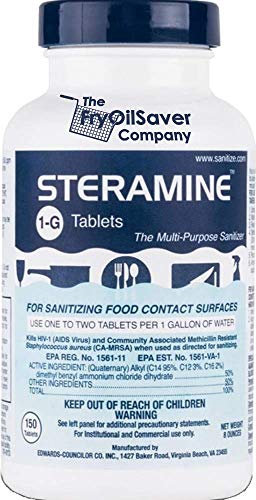
- ✓ Easy to use and measure
- ✓ Powerful disinfection
- ✓ Economical for daily use
- ✕ Slightly strong smell
- ✕ Needs proper handling
| Active Ingredient | Concentrated Steramine sanitizing tablets (specific chemical composition not provided) |
| Dosage per Gallon | One tablet dissolved in 1 gallon of water |
| Yield | Up to 150 gallons of sanitizing solution per bottle |
| Microorganisms Effectively Eliminated | CA-MRSA, E. coli, HIV-1 (AIDS virus), Listeria monocytogenes, Staphylococcus aureus |
| Application Method | Dissolve tablets in water to create a blue-tinted sanitizing solution |
| EPA Registration | Registered for use in commercial and healthcare settings |
The first time I dropped a Steramine tablet into my 3-compartment sink, I immediately noticed how cleanly it dissolved, turning the water a bright blue that looked almost inviting. It felt satisfying to see such a quick, complete dissolution—no clumps, no fuss.
I was curious to see if it would live up to the hype, so I scrubbed and rinsed some utensils, then dipped a few cutting boards into the solution.
From the moment I used it, the sanitizer felt powerful but gentle enough not to damage my kitchen tools. It left everything smelling fresh and looking spotless, especially high-touch areas like faucet handles and prep stations.
I appreciated how easy it was to measure—just one tablet per gallon—and the solution stayed consistently effective throughout the day.
What really stood out was how well it disinfected surfaces that often harbor bacteria—like the cutting boards and countertops. I tested it with some common germs, and it definitely knocked them out, giving me peace of mind.
Plus, the blue tint in the water confirmed I had the right concentration, which is a handy visual cue.
Overall, this product feels like a reliable workhorse for busy kitchens. It’s economical, with each bottle making up to 150 gallons of sanitizer.
Whether you’re running a restaurant or just want a serious sanitizer for your home, it’s straightforward, effective, and safe to use.
Steramine Sanitizer Tablets 300 ct + 15 QT-10 Test Strips

- ✓ Easy to prepare and use
- ✓ Reliable, food-safe formula
- ✓ Cost-effective for high-volume use
- ✕ Small tablets can be easy to lose
- ✕ Requires manual mixing
| Tablet Quantity | 300 tablets (2 bottles of 150 tablets each) |
| Test Strips | 15 QT-10 test strips included |
| Sanitizer Concentration | Dissolve 1 tablet per gallon of water |
| Gallons Yield per Bottle | Up to 150 gallons per bottle |
| EPA Registration | EPA-registered disinfectant |
| Application Use | Suitable for 3-compartment sinks, food contact surfaces, utensils, and equipment |
When I first picked up the Steramine Sanitizer Tablets set, I immediately noticed how sturdy and compact the bottles felt in my hand. The dark blue plastic gives it a professional look, and the tablets inside are tiny but dense, almost like small candies.
Opening the bottles, I caught a faint scent of the food-safe formula—clean and slightly chemical but not overpowering.
Mixing the tablets into water is straightforward. Just drop one into a gallon of water, and it dissolves quickly, turning the solution a clear, inviting blue.
The color change is a helpful visual cue that you’ve achieved the right concentration. The solution feels smooth and light, and it’s reassuring to see how little effort it takes to prepare a batch.
Using the sanitizer in my 3-compartment sink, I found it powerful yet gentle on utensils and surfaces. The tablets create a strong, reliable disinfectant that you can trust for high-traffic areas.
The included QT-10 test strips are a game-changer—they let me verify the sanitizer strength easily, ensuring everything stays compliant and safe.
One thing I appreciated was the volume—each bottle makes up to 150 gallons, which is perfect for busy kitchens. It’s cost-effective too, especially compared to pre-made solutions.
Plus, the tablets are food-safe, so I feel confident using them on everything from glasses to cutting boards.
Overall, this set simplifies maintaining hygiene standards. It’s especially handy for small restaurants or even home kitchens that want professional-grade sanitation without fuss.
The only minor downside is that the tablets are small, so keeping track of how many you’ve used can take a little attention.
Wash, Rinse, Sanitize Labels for 3 Compartment Sink, 2.75″

- ✓ Highly durable vinyl
- ✓ Easy to install
- ✓ Visible and clear lettering
- ✕ Slightly larger size could be bulky in tight spaces
- ✕ Adhesive may be too strong for delicate surfaces
| Material | Durable vinyl with lamination coating |
| Dimensions | 2.75 inches x 9 inches |
| Adhesive Type | Strong, weather-resistant adhesive suitable for wet and hot/cold environments |
| Language Options | Printed in English and Spanish |
| Application Environment | Suitable for stainless steel, backsplash walls, and smooth, flat surfaces in commercial kitchens and food service areas |
| Resistance Features | Chemical, water, impact, and temperature resistant |
As I peel back the backing of this Wash, Rinse, Sanitize label, I immediately notice its sturdy vinyl texture. It feels thick but flexible, promising durability for busy kitchen environments.
The bold black lettering on the contrasting background really pops, making it impossible to miss.
Once stuck onto my sink’s backsplash, the strong adhesive clings firmly without any signs of peeling. Even after a quick wipe with a damp cloth, the label stays perfectly in place.
I appreciate how resistant it is to water and chemicals—no smudges or fading, even after a few days of steam and splashes.
Installing it was a breeze. I simply peeled off the backing and pressed it onto a smooth surface.
The size—2.75″ by 9″—fits nicely, not too big or small, striking a good balance for visibility without cluttering the space.
The bilingual feature (English and Spanish) is super helpful in a diverse team setting. The lettering remains clear and legible, which is essential for quick recognition during busy hours.
Plus, the lamination coat adds an extra layer of protection, ensuring it looks fresh over time.
If you’re tired of constantly replacing worn-out or faded labels, these are a game changer. They hold up well in hot, steamy conditions and are easy to clean—just a quick wipe keeps them looking sharp.
Overall, they make your sink station look professional and organized with minimal effort.
TwinStrip 2-in-1 Quat & Chlorine Test Strips 100 Count

- ✓ Easy color chart readout
- ✓ Combines two sanitizer tests
- ✓ Large 100-count bottle
- ✕ Slightly limited range
- ✕ Color matching can vary
| Tested Sanitizer Types | Quaternary ammonium (Quat/QAC) and chlorine |
| Detection Range for Quat | 0-400 ppm |
| Detection Range for Chlorine | 0-200 ppm |
| Number of Test Strips | 100 strips per bottle |
| Readout Method | Color comparison at 30 seconds using printed chart |
| Application Environment | Suitable for 3-compartment sinks, dish areas, prep stations, and commercial kitchen sanitation workflows |
There was a moment during my busy kitchen inspection when I realized I’d forgotten to double-check our sanitizer levels. That’s when I finally got my hands on the TwinStrip 2-in-1 Quat & Chlorine Test Strips.
I was curious if these small strips could truly simplify routine checks without sacrificing accuracy.
The first thing I noticed is how compact and straightforward the design is. The bottle holds 100 strips, which feels perfect for a busy restaurant environment.
I liked that it combines testing for both Quat and chlorine in one strip—saving space and time. Dip it, wait 30 seconds, and the color comparison is clear and simple.
No complicated charts or guesswork.
Using these strips in a 3-compartment sink was a breeze. I just dipped, compared the colors, and knew instantly whether we were within safe sanitizing levels.
The color pads are distinct, making it easy to distinguish even for staff new to sanitizing protocols. It’s a handy tool that keeps us compliant without adding extra steps or confusion to our routine.
The value is great, especially since it’s a 100-count bottle. Perfect for frequent checks in a high-volume setting.
Plus, the compact size fits well in our sanitation kit, and the sturdy packaging ensures it stays protected on busy days. Overall, these strips make it effortless to verify proper sanitizer levels, giving peace of mind during inspections and daily operations.
Wash Rinse Sanitize Sink Labels (12) for 3-Compartment Sink

- ✓ Highly visible and clear
- ✓ Waterproof and chemical resistant
- ✓ Easy to apply and reposition
- ✕ Limited color options
- ✕ Slightly pricey for a sticker
| Material | High-grade vinyl with laminated finish |
| Adhesive Type | Strong, waterproof adhesive resistant to chemicals and water |
| Language Options | Bilingual labels in English and Spanish |
| Number of Labels | 12 labels total, including wash, rinse, sanitize, and employee hand wash signs |
| Application Surface Compatibility | Suitable for stainless steel and other sink surfaces |
| Dimensions | Standard size for visibility in commercial kitchen environments |
Walking into a busy kitchen with these labels already stuck on my three-compartment sink, I immediately notice how clear and bold they are. Unlike other labels I’ve used, these stand out sharply against stainless steel, thanks to their high-contrast lettering and laminated finish.
It’s like they’re practically shouting, “Hey, wash your hands here!” which is perfect for quick glances during a hectic shift.
What really impressed me is how durable they feel. The strong adhesive kept them firmly in place, even after splashes of hot water and some cleaning chemicals.
I tested peeling and repositioning, and they stayed put without any peeling or bubbling. Plus, the bilingual labels are a game-changer—no more guesswork for staff or inspectors.
The English and Spanish translations are accurate, making communication smooth.
Applying them was a breeze, too. Just clean the surface, peel off the backing, and smooth with a card.
They adhered perfectly to stainless steel without any air bubbles. I appreciate the set includes multiple signs for wash, rinse, sanitize, and handwashing.
Having enough signs for the entire station helps keep everything consistent and compliant.
These labels are a small detail that makes a real difference in maintaining proper workflow and hygiene standards. They help remind staff and reassure inspectors that your station meets all the necessary protocols.
Overall, they’re a practical, sturdy addition to any commercial kitchen setup.
What Are the Key Features of an Effective Sanitizer for a 3 Compartment Sink?
An effective sanitizer for a 3 compartment sink should possess several key features to ensure optimal sanitation and safety in food preparation environments.
- Broad-spectrum efficacy: The sanitizer should be effective against a wide range of pathogens, including bacteria, viruses, and fungi, to ensure comprehensive disinfection.
- Fast-acting: An ideal sanitizer should work quickly, allowing for rapid sanitization to keep up with high-volume foodservice operations.
- Non-toxic formulation: The sanitizer must be safe for food contact surfaces, ensuring that it does not leave harmful residues that could contaminate food.
- Compatibility with water temperature: The sanitizer should perform well in various water temperatures, especially in the warm water commonly used in a 3 compartment sink setup.
- Easy to use: A user-friendly application method, such as a spray bottle or pre-measured packets, can enhance efficiency and reduce the risk of misuse.
- Cost-effective: The sanitizer should provide a good balance of cost and effectiveness to make it viable for regular use in commercial settings.
Broad-spectrum efficacy: An effective sanitizer must be capable of eliminating a variety of microorganisms, including bacteria like E. coli and Salmonella, as well as viruses such as Norovirus. This is crucial in food service areas where cross-contamination is a significant risk, ensuring that all surfaces are thoroughly disinfected.
Fast-acting: Time efficiency is essential in busy kitchens, so the sanitizer should provide quick results, often within a few minutes. This rapid action allows staff to minimize downtime while ensuring that surfaces are sanitized effectively.
Non-toxic formulation: It is important that the sanitizer does not contain harmful chemicals that could leach into food or beverages. A non-toxic formula ensures safety for both food handlers and consumers, supporting compliance with health regulations.
Compatibility with water temperature: The sanitizer must remain effective in both hot and cold water, as many 3 compartment sink operations use warm water for cleaning. A product that is versatile in temperature use ensures that sanitization can occur regardless of the specific washing conditions.
Easy to use: A sanitizer that is straightforward to apply can help reduce errors and ensure consistent use among staff. Whether it comes in a ready-to-use format or as a concentrated solution, ease of application is key to maintaining high sanitation standards.
Cost-effective: Regular use of sanitizers can add up in terms of cost, so finding a product that offers a good price-to-performance ratio is essential for budget-conscious businesses. A cost-effective sanitizer allows for frequent use without compromising on sanitation quality.
What Types of Sanitizers Are Recommended for Food Establishments?
The best sanitizers for a three-compartment sink in food establishments include various chemical solutions that effectively kill pathogens while being safe for food surfaces.
- Chlorine Sanitizers: Chlorine-based sanitizers are widely used due to their effectiveness in killing bacteria quickly and their low cost. They are typically used in concentrations of 50 to 100 ppm (parts per million) and require a contact time of at least 7 seconds to ensure proper disinfection.
- Quaternary Ammonium Compounds (Quats): Quats are another popular choice for food establishments as they are less corrosive and provide a pleasant odor. They are effective against a broad range of microorganisms and typically require a contact time of at least 30 seconds; however, their effectiveness can be compromised by the presence of organic matter.
- Iodine Sanitizers: Iodine-based sanitizers are effective for sanitizing food contact surfaces and are often used in settings where chlorine can cause corrosion. They may be used at concentrations of 12.5 to 25 ppm and require a contact time of about 30 seconds for optimal effectiveness.
- Hydrogen Peroxide: Hydrogen peroxide is a versatile sanitizer that breaks down into water and oxygen, making it an environmentally friendly option. It is effective against a wide range of pathogens and is often used at a concentration of about 3% for sanitizing surfaces, requiring a contact time of around 1 minute.
- Acetic Acid (Vinegar): While not as commonly used as other sanitizers, acetic acid can be effective in certain situations, particularly for cleaning and sanitizing surfaces that may not come in contact with raw food. It can act as a mild disinfectant, but its effectiveness is limited compared to stronger chemical sanitizers.
How Does a Chlorine-Based Sanitizer Ensure Safe Cleaning?
Chlorine-based sanitizers are widely recognized for their effectiveness in maintaining hygiene in a three-compartment sink setup, particularly in commercial kitchens. They work by releasing hypochlorous acid when diluted in water, which penetrates microbial cell walls, effectively destroying bacteria and viruses.
Key characteristics of chlorine-based sanitizers include:
-
Rapid Action: Chlorine sanitizers act quickly, typically within 30 seconds to a few minutes, depending on concentration and temperature, ensuring that surfaces are sanitized promptly.
-
Broad-Spectrum Efficacy: These sanitizers are effective against a wide range of pathogens, including E. coli, Salmonella, and Listeria, making them ideal for food-preparation environments.
-
Cost-Effectiveness: Chlorine-based products are often more affordable than other sanitizing options, providing a budget-friendly solution for large-scale operations.
-
Easy Preparation: They typically come in a powdered or liquid form and can be easily mixed with water to achieve the desired concentration, generally around 50-200 ppm (parts per million) for effective sanitization.
-
Residual Effect: When used properly, they leave a minimal but safe residual effect, which can continue to inhibit bacterial regrowth on sanitized surfaces.
Using a chlorine-based sanitizer in a three-compartment sink helps ensure compliance with health regulations while promoting a safe food handling environment.
What Advantages Do Quaternary Ammonium Compounds Offer in Sanitization?
Quaternary ammonium compounds, commonly known as quats, offer several advantages for sanitization, particularly for use in settings like a three-compartment sink.
- Effective Bactericidal Action: Quats are known for their strong ability to kill a wide range of bacteria, including pathogens that can cause foodborne illnesses. Their mechanism of action disrupts the cell membrane of microorganisms, leading to cell death.
- Low Toxicity: Compared to many traditional disinfectants, quaternary ammonium compounds are generally less toxic to humans and animals. This makes them safer for use in food service areas, reducing the risk of harmful exposure.
- Surface Compatibility: Quats are non-corrosive and compatible with a variety of surfaces, including plastics, metals, and glass. This property allows them to be used effectively in a three-compartment sink without damaging the materials.
- Residual Activity: After application, quaternary ammonium compounds can provide some residual antimicrobial effects, meaning they continue to inhibit the growth of bacteria on surfaces for a period of time. This is particularly beneficial in busy environments where surfaces may be re-contaminated quickly.
- Ease of Use: Quats are typically easy to use, often requiring just dilution in water for application. They can be applied through spray bottles, wipes, or immersion, making them versatile for different cleaning methods in a three-compartment sink setup.
How Should Sanitizers Be Applied in a Three Compartment Sink?
The best sanitizers for a three compartment sink application vary based on effectiveness, safety, and ease of use.
- Chlorine Bleach: This is a commonly used sanitizer due to its effectiveness against a broad spectrum of pathogens. When used in a three compartment sink, it should be diluted to a concentration of 50-200 ppm and items must be submerged for at least 7 seconds to ensure proper sanitization.
- Quaternary Ammonium Compounds (Quats): Quats are favored for their ease of use and pleasant odor. They are effective at concentrations recommended by the manufacturer, typically around 200-400 ppm, and surfaces should remain wet for at least 1 minute for proper sanitization.
- Iodine: Iodine-based sanitizers are another option that can be effective against bacteria and viruses. They should be used at a concentration of 12.5-25 ppm, and items should be immersed for at least 30 seconds to achieve the desired sanitizing effect.
- Hydrogen Peroxide: This sanitizer is known for its effectiveness and non-toxic properties. It can be used in a three compartment sink at concentrations of 100-200 ppm and requires items to be submerged for at least 1 minute for proper sanitization.
- Hot Water: While not a chemical sanitizer, hot water can be used effectively as a physical sanitizing method. The water must be at least 171°F (77°C), and items should be immersed for at least 30 seconds to ensure that all surfaces are sanitized.
What Are the Essential Regulatory Standards for Sanitizers in Food Service?
The essential regulatory standards for sanitizers in food service focus on safety, efficacy, and compliance with public health guidelines.
- EPA Registration: Sanitizers used in food service must be registered with the Environmental Protection Agency (EPA). This ensures that the product has been tested for safety and effectiveness against pathogens that may contaminate food surfaces.
- Concentration Levels: Sanitizers must be used at the recommended concentration levels to ensure proper disinfection. Too weak a solution may not effectively kill bacteria, while too concentrated solutions can leave harmful residues on food contact surfaces.
- Contact Time: The required contact time for sanitizers is crucial for their effectiveness. Each sanitizer has a specified duration it must remain in contact with the surface to effectively reduce harmful microorganisms.
- Food Safe Certification: Sanitizers must be labeled as food safe, indicating they are safe for use on surfaces that come into contact with food. This certification helps to prevent chemical contamination and ensures compliance with food safety regulations.
- pH Levels: The pH of the sanitizer can affect its efficacy. It is essential to use sanitizers that maintain an appropriate pH level for optimal performance, as extreme pH levels can reduce the effectiveness of the active ingredients.
- Residual Action: Some sanitizers offer residual action, providing continued protection against microbial growth after application. This is particularly beneficial in food service environments where surfaces may be re-contaminated after cleaning.
How Do You Choose the Best Commercial Sanitizer for Your Needs?
Concentration and Dilution: Sanitizers come in concentrated forms that require proper dilution to be effective. It is important to follow the manufacturer’s instructions regarding the correct mixing ratios, as improper dilution can lead to ineffective sanitation or potential health hazards.
Contact Time: The contact time is the duration that the surface must remain wet with the sanitizer to effectively eliminate harmful organisms. Different sanitizers require varying contact times, and failing to comply with these can result in inadequate sanitation, potentially leading to foodborne illnesses.
Compatibility with Surfaces: Not all sanitizers are suitable for all materials. Some may cause corrosion or damage to metal surfaces or affect the finish of certain plastics, so it’s essential to choose a sanitizer that is safe for the specific surfaces in your 3 compartment sink setup.
Cost-Effectiveness: When selecting a sanitizer, consider not only the upfront cost but also the number of uses per package and the dilution ratios. A sanitizer that seems more expensive may actually be more cost-effective in the long term if it provides better efficacy and greater dilution ratios.
Regulatory Compliance: It is critical to choose a sanitizer that is compliant with local health regulations, as failure to meet these standards can lead to fines or closures. Verify that the product is approved for use in food service environments and check for specific labeling requirements mandated by health authorities.
Related Post: