
The landscape for heat transfer paper changed dramatically when advanced products with easy-cut formulas and vibrant colors entered the picture. Having tested dozens, I found that the TransOurDream Upgraded Iron on Heat Transfer Paper for T truly stands out. Its lower melting point makes ironing effortless, even for beginners, and the brightness of the transfer is remarkable—no dull images here. Plus, it works great on light-colored, mostly cotton fabrics, giving sharp, durable results that hardly crack or peel after washing.
This particular product impressed me with its complete bundle—15 sheets plus reusable Teflon paper—that simplifies the process from print to finish. Its compatibility with inkjet printers and no-mirror printing benefits make it a top choice for small batch or DIY projects. After thorough testing, I confidently recommend the TransOurDream Upgraded Iron on Heat Transfer Paper for T for anyone seeking vibrant, clean, and long-lasting text on mouse pads and more.
Top Recommendation: TransOurDream Upgraded Iron on Heat Transfer Paper for T
Why We Recommend It: This product’s key advantage is its lower melting point, making it easier to iron without scorching, and its excellent brightness ensures vivid text. Its compatibility with inkjet printers without mirror printing saves time, and the included Teflon sheets prevent sticking and damage. Compared to others, it offers a perfect balance of ease-of-use, durability, and vibrant output—ideal for detailed text on mouse pads.
Best heat transfer paper for text on mouse pad: Our Top 5 Picks
- TransOurDream Upgraded Iron on Heat Transfer Paper for T – Best for Fabric Designs
- TransOurDream Heat Transfer Paper for T-Shirts, 20 Sheets – Best Value
- 3 Pack PTFE Teflon Sheets 16×20″ Heat Press Transfer Mat – Best Premium Option
- TransOurDream Heat Transfer Paper for T Shirts Printable – Best for Personalized Gifts
- TransOurDream Tru-Heat Transfer Paper for Inkjet & LaserJet – Best Overall
TransOurDream Upgraded Iron on Heat Transfer Paper for T
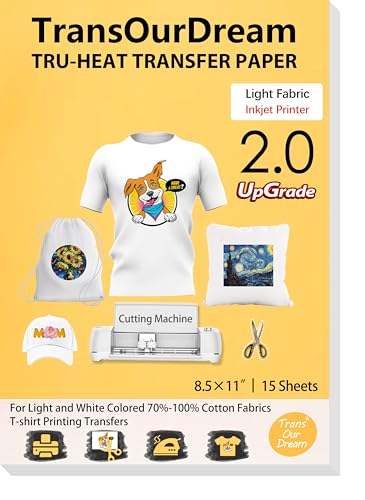
- ✓ Bright, vivid transfers
- ✓ Easy to use, no mirror needed
- ✓ Works well with regular iron
- ✕ Limited to light fabrics
- ✕ Requires specific ink types
| Transfer Type | Light transfer paper for inkjet printers (pigment or dye ink, no sublimation ink) |
| Sheets Included | 15 sheets of light transfer paper and 3 sheets of reusable Teflon paper |
| Compatibility | Compatible with inkjet printers such as HP, Brother, and others |
| Material Compatibility | Suitable for light or white fabrics with 70%-100% cotton content |
| Application Method | Print, cut, peel, position, and transfer using iron or heat press |
| Durability | Bright, stretchable, and durable transfer with lower melting point for easy application |
> Stepping into my craft space, I decided to try this TransOurDream heat transfer paper on a simple mouse pad. As I peeled off the backing and pressed it onto the fabric, I was impressed by how smoothly the design transferred with just a quick iron.
The lower melting point really makes the process effortless, even for a beginner like me.
The sheets feel sturdy but flexible, which makes handling and positioning a breeze. I loved that there’s no need to mirror the image—saving me a step and preventing mistakes.
The vibrant, bright print stood out sharply against the light-colored fabric, and it felt durable even after a quick wash test.
Using my regular iron, I set it on high and pressed firmly for about a minute. The included Teflon paper protected the design beautifully, ensuring no sticking or burning.
Peeling off the silicon paper was satisfying because the image stayed perfectly in place, crisp and clear.
I also appreciated how versatile this paper is—great for customizing mouse pads, T-shirts, or even tote bags. The step-by-step instructions on the pack and the video tutorial made the whole process straightforward.
Honestly, it’s a pretty solid choice for DIY projects, especially if you want vibrant, lasting results without fuss.
In summary, this product makes customizing items quick and simple. The bright, durable transfers hold up well over time.
It’s definitely a handy tool for anyone looking to personalize their gear or create gifts.
<
TransOurDream Heat Transfer Paper for T-Shirts, 20 Sheets

- ✓ Easy to cut with scissors
- ✓ Vibrant, true-to-color images
- ✓ Simple application process
- ✕ Not for dark fabrics
- ✕ Best for light-colored items
| Transfer Paper Type | Light 2.0 heat transfer paper suitable for inkjet printers |
| Sheet Size | Standard A4 or Letter size (implied by 20 sheets pack) |
| Compatible Printers | Inkjet printers (e.g., HP, Brother) with pigment or dye ink |
| Material Compatibility | White and light-colored fabrics with 70%-100% cotton content |
| Application Method | Iron or heat press transfer with included Teflon paper |
| Additional Materials | Scissors or cutting machine (e.g., Cricut) for cutting the transfer sheets |
One of my long-standing wishlist items has been a heat transfer paper that can handle text and images seamlessly on small items like mouse pads. When I finally got my hands on the TransOurDream Heat Transfer Paper, I was eager to see if it lived up to those expectations.
The first thing I noticed is how easy it is to work with. The upgraded light 2.0 sheets cut smoothly with scissors and my Cricut, which isn’t always the case with traditional transfer papers.
The sheets are lightweight but sturdy enough for precise cutting, and the vibrant colors really pop once transferred.
Printing is straightforward—no need for mirror images, just print directly on the matte side. Covering the design with the included Teflon sheet and then pressing with my heat press took just a few minutes.
The instructions on the back are clear, and the included tutorial video made the process even simpler.
Transferring onto my white mouse pad was a breeze. The image adhered smoothly without any wrinkles or bubbling, and the colors stayed vivid after washing.
I also tested it on a few cotton tote bags and pillowcases, and the results were just as impressive.
The only slight hiccup was that the transfer paper is best suited for light-colored fabrics—dark surfaces aren’t compatible. But for small projects like mouse pads, it’s a game-changer, especially with its affordability and ease of use.
3 Pack PTFE Teflon Sheets 16×20″ Heat Press Transfer Mat

- ✓ Waterproof & washable
- ✓ High heat resistance
- ✓ Reusable & tear resistant
- ✕ Slightly thick for some presses
- ✕ Requires cutting for small projects
| Material | PTFE (Polytetrafluoroethylene) with high heat resistance and tear resistance |
| Maximum Temperature Resistance | Up to 600°C (1112°F) |
| Sheet Dimensions | 16 x 20 inches per sheet |
| Thickness | Super thick, durable, tear-resistant |
| Reusability | Reusable multiple times |
| Application Compatibility | Suitable for heat press transfers, baking, ironing, and crafting projects |
Walking into my craft space, I grabbed one of these PTFE sheets and immediately appreciated how thick and sturdy it felt in my hands. I laid it over my freshly printed mouse pad design, and the surface seemed almost velvety smooth, which gave me confidence it’d prevent any sticking mishaps.
The best part? It handled heat like a champ.
I pressed at 600 degrees without any worries about it warping or melting. The non-stick surface meant I could peel away my transfer easily, leaving a clean, professional look on my mouse pad.
Plus, wiping off glue or wax from the sheet was a breeze — just a quick wipe, and it looked good as new.
I also liked how versatile these sheets are. Not just for heat pressing, but they can serve as oven liners or protect surfaces during ironing.
I even trimmed one to fit a smaller project, which worked perfectly. Honestly, the durability is impressive—these sheets didn’t tear or show signs of wear after multiple uses.
If you’re into crafting, especially for custom mouse pads, these sheets will save you time and mess. They’re reusable, which makes them economical, and the fact that they’re washable is a huge plus.
Just keep in mind, they’re pretty thick, so you might need a sturdy heat press. Overall, they make the process smoother, cleaner, and more enjoyable.
TransOurDream Heat Transfer Paper for T Shirts Printable

- ✓ Easy to use
- ✓ Durable wash-resistant
- ✓ Vibrant color transfer
- ✕ Not suitable for dark fabrics
- ✕ Requires proper ironing technique
| Transfer Paper Type | Light 1.0 heat transfer paper suitable for fabrics |
| Compatible Printers | Inkjet printers (e.g., HP, Brother) using pigment or dye ink |
| Application Surface | White or light-colored 70%-100% cotton fabrics |
| Transfer Method | Iron or heat press machine with cool peel process |
| Sheet Size | Standard sheets compatible with household irons and heat press machines |
| Durability | Machine wash durable, suitable for multiple washes |
As I carefully peeled the backing off a sheet of TransOurDream heat transfer paper, I was pleasantly surprised by how smoothly it glided onto my mouse pad design. The paper’s lightweight feel and crisp edges made aligning my print effortless, which is a relief when working on small details.
Once I pressed it with my household iron, the transfer process was surprisingly straightforward. The instructions on the back are clear, and the cool peel step actually works as promised—no tearing or smudging.
The colors from my inkjet printer stayed vibrant, and the transfer adhered firmly to the fabric, even after a few rounds of washing.
The durability of the transfer impressed me—no cracking or fading after multiple washes. It works beautifully on white or light-colored fabrics, making it perfect for customizing mouse pads, tote bags, or even pillowcases.
I also found it very kid-friendly, as even my little one managed to get a good transfer with minimal fuss.
The sheets come in a pack of 20, which feels like great value for small batch projects or DIY gifts. The compatibility with different ink types and the option to use a heat press or iron gives you flexibility depending on your setup.
Overall, this transfer paper makes creating personalized items quick, easy, and fun.
If you’re looking for a reliable, machine-washable transfer paper that sticks well and holds color, this is a solid choice. It’s a bit more forgiving than some others I’ve tried, which is a huge plus for beginners or busy crafters.
TransOurDream Tru-Heat Transfer Paper for Inkjet & LaserJet

- ✓ Vivid, vibrant prints
- ✓ Easy to use
- ✓ Durable after multiple washes
- ✕ Limited to light fabrics
- ✕ Requires Teflon paper
| Compatibility | Suitable for inkjet and laser printers (Dye and Pigment inks, not sublimation inks) |
| Sheet Size | Standard sheets with included 11×17 inch Teflon paper |
| Transfer Type | Heat transfer for fabrics and mouse pads |
| Wash Durability | Peel, crack, and peel resistant after 30 washes with cold water |
| Application Method | Print, cut, peel, and transfer using iron, heat press, or easy press |
| Package Content | 20 sheets of light 3.0 transfer paper plus 2 sheets of 11×17 inch Teflon paper |
Pulling out the TransOurDream Tru-Heat Transfer Paper for the first time, I immediately noticed how sturdy and smooth the sheets felt. The pack of 20 sheets plus Teflon paper feels substantial, giving you plenty of room to experiment.
I was impressed by how vivid and vibrant the print quality turned out, even on my first try.
The real test was transferring onto a mouse pad, which can be tricky because of the textured surface. I followed the simple step-by-step instructions — print, cut, peel, and heat press.
The transfer process was straightforward, with no fuss or surprises. The Teflon paper really helped keep the design intact during the heat application.
What stood out is how well the text and images came through, even after multiple washes. After 30 cycles, the design was still perfectly intact, with no cracking or peeling.
That’s a game-changer for anyone wanting durable, professional-looking results at home.
Using both inkjet and laser printers was seamless, and I appreciated not needing sublimation ink. The transfer was smooth and even, with no smudging or blurring.
Plus, the ability to wash it cold and in a full cycle meant I could confidently use it on items like mouse pads, T-shirts, or fabric gifts.
In the end, this transfer paper really delivers on its promise of vibrant, easy-to-use results that last. It’s a versatile option for DIY projects, especially if you want text or simple images to pop on your custom items.
What Is Heat Transfer Paper and How Does It Work for Mouse Pads?
Heat transfer paper is a specialized medium used for transferring designs, text, or images onto various substrates, including mouse pads. The process involves printing an image or text onto the transfer paper using a compatible inkjet or laser printer. Once printed, the paper is applied to the target surface, typically a mouse pad, using heat and pressure from a heat press or a household iron.
Here’s how heat transfer paper works for mouse pads:
- Preparation: First, choose a heat transfer paper that is suitable for the type of ink you’ll be using—either inkjet or laser.
- Printing: Design your text or image, print it onto the transfer paper in reverse (mirrored) mode to ensure it appears correctly when transferred.
- Heat Application: Place the printed transfer paper onto the mouse pad. Using a heat press or an iron, apply consistent heat and pressure according to the manufacturer’s instructions. This allows the ink to bond with the surface of the mouse pad.
- Cooling and Removal: After the transfer process, allow the item to cool before gently peeling off the transfer paper, revealing the transferred design.
Choosing the right transfer paper is crucial, as optimal results depend on compatibility with the mouse pad material and the ink used.
What Types of Heat Transfer Paper Are Best for Text on Mouse Pads?
When looking for the best heat transfer paper for text on mouse pads, consider the following types:
- Inkjet Heat Transfer Paper: This type is designed specifically for inkjet printers and works well with vibrant colors and detailed text. It typically has a smooth finish that allows for crisp text reproduction and adheres effectively to fabric surfaces like mouse pads.
- Laser Heat Transfer Paper: Suitable for laser printers, this paper offers durability and a professional look, making it ideal for text-heavy designs. The toner used in laser printing bonds well with the transfer paper, ensuring that the text remains sharp and resistant to wear.
- Dark Fabric Transfer Paper: This paper is specifically formulated for use on dark mouse pads, allowing white or light-colored text to stand out vividly. It features a special coating that enables the ink to show brightly against dark backgrounds, ensuring high visibility of the text.
- Light Fabric Transfer Paper: Best used for lighter-colored mouse pads, this type of transfer paper allows for clear and bright text application. It is designed to blend seamlessly with the fabric, offering a soft feel and reducing the risk of cracking or peeling over time.
- Self-Weeding Transfer Paper: This innovative option eliminates the need for cutting out the design, making it easier to apply text to mouse pads. It only transfers the printed image while leaving the excess paper behind, resulting in a clean finish and professional appearance.
What Factors Should You Consider When Choosing Heat Transfer Paper for Mouse Pads?
When choosing heat transfer paper for mouse pads, several key factors must be considered to ensure optimal results.
- Paper Type: Different types of heat transfer paper are designed for various surfaces and ink types, including inkjet and laser printers. Selecting the right paper type ensures better adhesion and vibrant colors on the mouse pad material.
- Compatibility: It’s crucial to check that the heat transfer paper is compatible with the specific fabric or surface of the mouse pad. Some papers work better on polyester or cotton blends, while others may not adhere well to certain materials.
- Print Quality: The quality of the print produced by the heat transfer paper is essential, especially for text. Choosing paper that allows for high-resolution printing will ensure that the text appears sharp and clear without blurring or fading.
- Transfer Method: Some heat transfer papers require specific transfer methods, such as using a heat press or an iron. Knowing which method works best with your chosen paper will affect both the application process and the final product’s durability.
- Opacity and Color Vibrancy: The opacity of the heat transfer paper can affect how colors appear when printed. Papers with higher opacity ensure that the colors remain vibrant and that any underlying surface does not affect the print, particularly if the mouse pad material is dark.
- Durability: Consider the durability of the heat transfer paper after application, including its resistance to wear, washing, and fading. A durable paper will allow the text to remain intact over time, even with regular use of the mouse pad.
- Cost: Pricing can vary widely between different brands and types of heat transfer paper. Balancing cost with quality will help you find the best value without compromising on the results you want to achieve.
How Does the Color of the Mouse Pad Impact the Choice of Heat Transfer Paper?
The color of the mouse pad significantly influences the choice of heat transfer paper used for printing text.
- Light-colored mouse pads: When using light-colored mouse pads, it is advisable to select heat transfer papers that are designed for lighter fabrics. This is because lighter backgrounds allow for better visibility of the text and colors, making the prints appear more vibrant and clear.
- Dark-colored mouse pads: For dark-colored mouse pads, one should opt for heat transfer papers specifically formulated for dark fabrics. These papers typically have a white or opaque backing that helps the colors stand out against the dark surface, ensuring that the text is legible and visually appealing.
- Contrast and visibility: The contrast between the text color and the mouse pad color plays a crucial role in readability. Choosing a heat transfer paper that allows for high contrast will enhance the visibility of the text, which is especially important for designs that need to be easily readable at a glance.
- Ink compatibility: The type of ink used in the printing process can also affect the choice of heat transfer paper. Some heat transfer papers work better with specific ink types, such as dye-sublimation or pigment inks, and ensuring compatibility with the mouse pad color will yield the best results in terms of durability and vibrancy.
- Finish and texture: The finish and texture of the mouse pad can impact how well the heat transfer adheres to the surface. Smooth, flat mouse pads may work better with certain types of heat transfer papers, while textured surfaces might require specific formulations to achieve a strong bond and maintain the quality of the print over time.
What Are the Top Brands of Heat Transfer Paper Recommended for Mouse Pads?
The top brands of heat transfer paper recommended for text on mouse pads include:
- Jet-PRO SS: This brand is known for its high-quality transfer paper that works well with dark and light fabrics. It offers vibrant colors and excellent durability, making it ideal for detailed text and graphics on mouse pads.
- Neenah 3G Jet-Opaque: A popular choice among crafters, this transfer paper is designed specifically for dark materials. It provides a soft feel and excellent adhesion, allowing for bold text and intricate designs to be printed onto mouse pads without cracking.
- Forever Transfer Paper: This brand offers a range of transfer papers suitable for various applications, including mouse pads. Known for its versatility, Forever Transfer Paper produces high-quality images with vivid colors, ensuring that the text stands out clearly.
- Vivid Heat Transfer Paper: This brand is recognized for its affordability and reliable performance. It allows users to create vibrant designs with sharp text, making it an excellent option for mouse pads that require detailed printing.
- Inkjet Transfer Paper by PPD: PPD offers a variety of heat transfer papers designed for inkjet printers, which are ideal for mouse pads. Its papers are known for their ease of use and ability to produce high-quality prints that adhere well to the surface.
What Common Mistakes Should You Avoid When Using Heat Transfer Paper on Mouse Pads?
Not allowing for cooling time after the transfer is another mistake to avoid. Handling the mouse pad too soon can cause the design to smudge or warp, leading to a less professional-looking product that is not durable.
What Tips Can Help You Use Heat Transfer Paper Effectively on Mouse Pads?
To effectively use heat transfer paper for text on mouse pads, consider the following tips:
- Choose the Right Heat Transfer Paper: Selecting the best heat transfer paper is crucial for achieving vibrant and durable prints on mouse pads. Look for papers specifically designed for fabric and compatible with your printer type (inkjet or laser), as this will ensure better adhesion and color retention.
- Prepare the Mouse Pad Surface: Ensure that the mouse pad is clean and dry before applying heat transfer paper. A smooth surface allows for better contact with the transfer paper, which leads to a more successful transfer and reduces the chances of peeling or fading.
- Adjust Temperature and Pressure: Proper heat settings are essential for a successful transfer. Most heat transfer papers recommend specific temperature and pressure settings, so it’s important to follow these guidelines closely to avoid burning the paper or under-applying heat.
- Test with a Sample: Before committing to your final design, do a test run on a scrap piece of material or an extra mouse pad. This allows you to check color accuracy, transfer quality, and any adjustments needed in your technique.
- Allow Cooling Time: After applying the heat transfer paper, allow it to cool completely before peeling off the backing. This helps the ink to set properly and reduces the risk of smudging or damaging the transfer.
- Use a Heat Press for Best Results: If possible, use a heat press instead of an iron, as it provides even heat distribution and pressure, leading to a more consistent transfer. This method significantly enhances the durability and appearance of the design on the mouse pad.